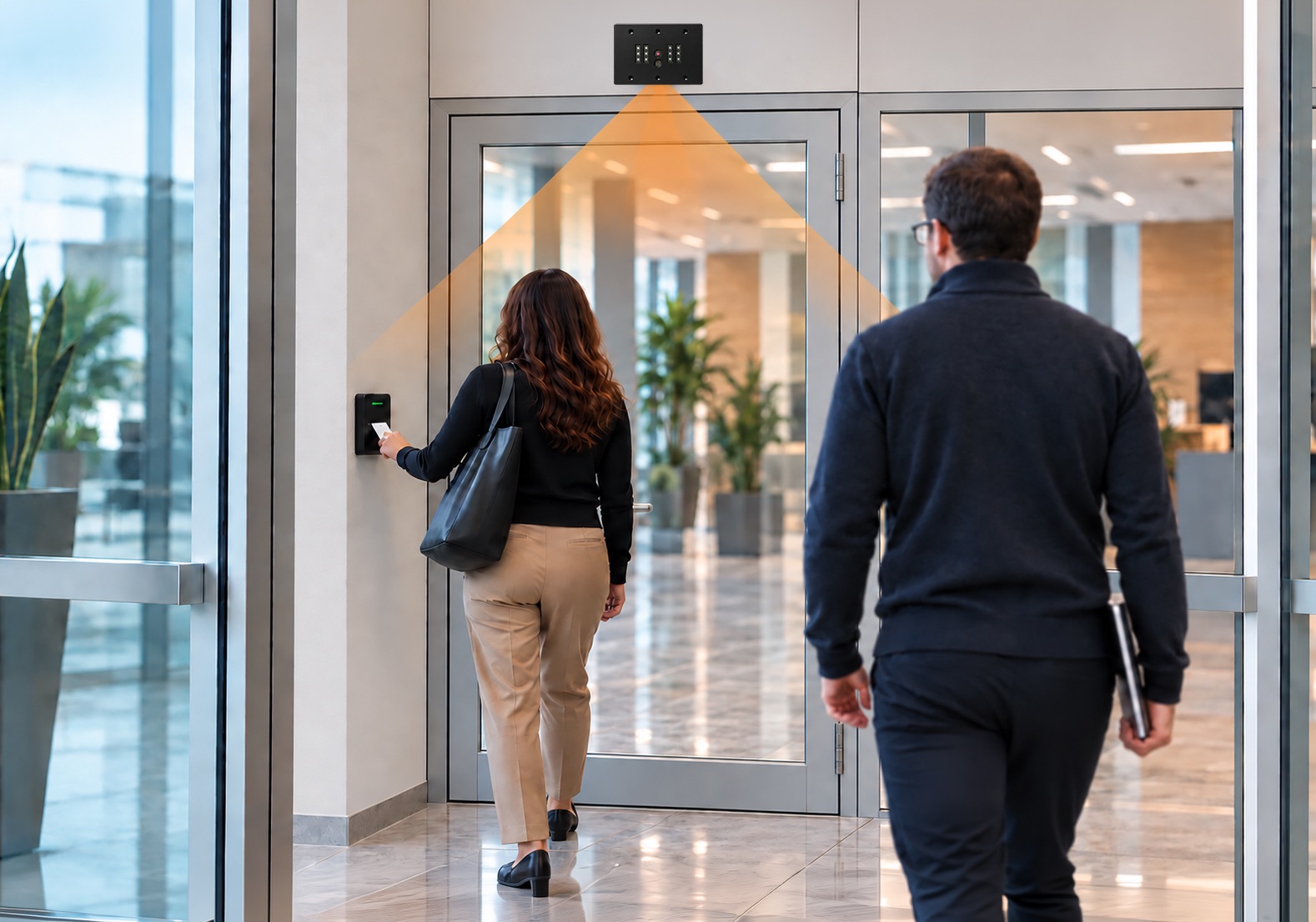
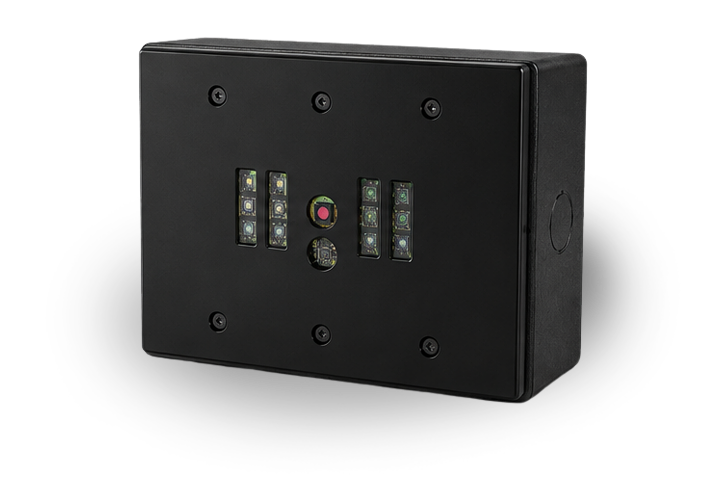
A sensor above access-controlled doors that counts who actually walks through, so one badge lets in one person. Built on Nomo's sensing technology, with the AI running on the device and no video leaving the building.
Client
Tailgate Detect
Website
tailgatedetect.comThe Challenge
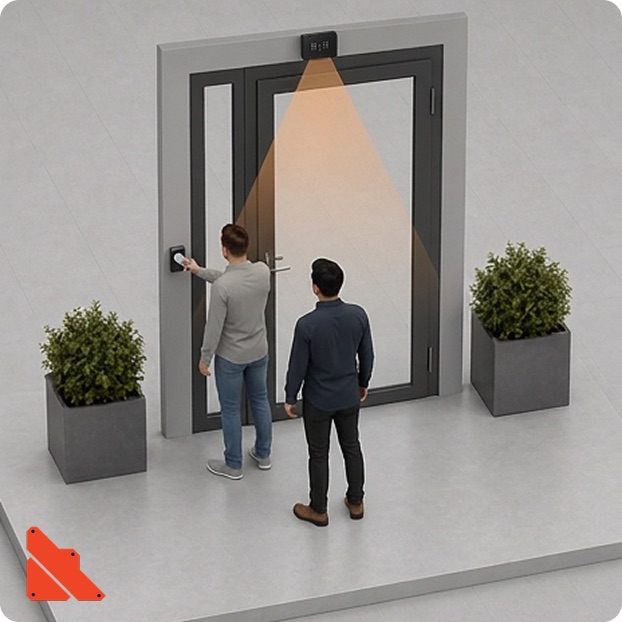
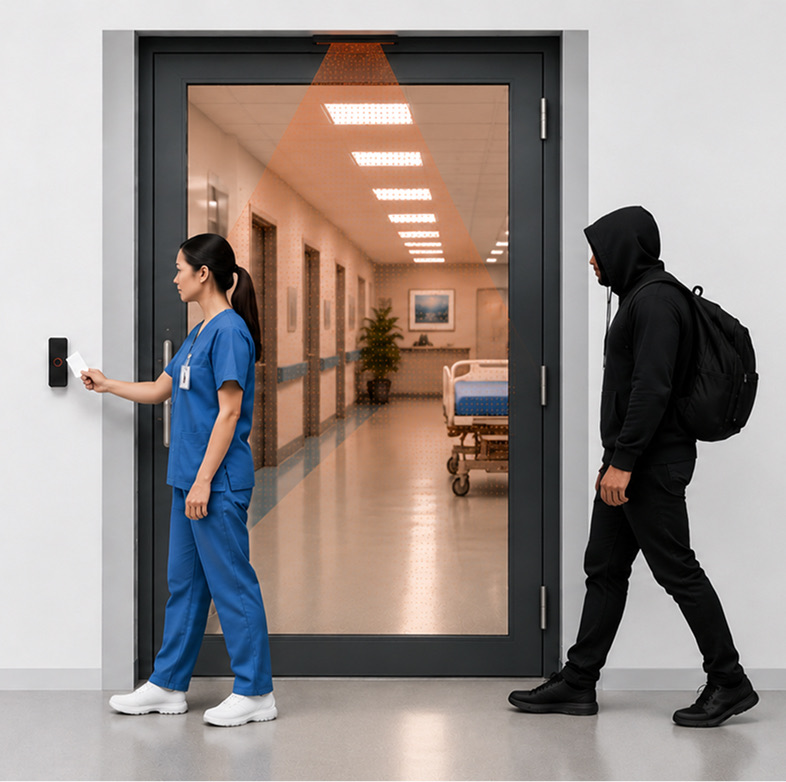
Access control checks whether a badge is valid. It doesn't check how many people walk through on it. Tailgating, one person holding the door for the next, is how unauthorised people get into data centres, labs, pharmacies and server rooms. The systems that catch it today are expensive and hard to install, so they only go on a handful of doors, and camera analytics raise privacy questions of their own. Tailgate Detect set out to make detection cheap and simple enough for every controlled door, without cameras watching faces and without video leaving the building.
Our Approach
We build the software end to end, on Nomo's sensing hardware. On the device, our models read depth data from above the door, find each person in the detection zone, follow them through and tell a person apart from a cart, a backpack or a wheelchair, so a colleague pushing a trolley doesn't set off an alarm. Everything runs on the sensor; no video leaves the building. The firmware turns each crossing into an event and hands it to the door: an alert, supported locking hardware, or the access control system the customer already runs. Behind it, a backend logs events, manages devices and handles authentication, with secure remote access to sensors in the field. That access feeds the part that keeps the models improving: a pipeline that collects real doorway traffic from installed sensors, labels it, trains new model versions and ships them back to the device.
The Outcome
Tailgate Detect logs entries, exits and tailgating events as they happen, and tells people apart from the carts and bags they bring through. We started in August 2026 and the work is ongoing: every sensor in the field adds real doorway traffic to the training data, and each new model version learns more about what passes through the door.
How the model sees a door
One doorway, four steps, all on the sensor. The depth data never leaves the device; only the event does.
Our model pipeline
The sensors in the field are also where the next model comes from.
Collect
Sensors on real doors record depth data from everyday traffic.
Label
We mark who and what crossed: people, carts, bags, wheelchairs.
Train
New model versions learn from the labelled doorways.
Test
Each version is checked on recorded traffic before it ships.
Ship
The model goes back onto the sensor, small enough to run there.
Every release goes back to the sensors, and they collect the next round.
Talk through the architecture with the team that built this.
Share what you're building, where the technical risk sits and what stage you're at. We'll reply with an honest recommendation on where to start.
Key Features
Detect
Depth sensing watches a defined zone around the door and finds everyone in it.
Validate
On-device AI separates a person from a cart, a backpack or a mobility device, so everyday traffic doesn't raise false alarms.
Respond
A tailgate can sound an alert, notify security, engage supported locking hardware or hand the event to the access control system.
Document
Every event is logged with its history for review and audits.
Privacy first
No facial recognition, no biometric identification and no video streamed off the premises.
Single-cable install
One network cable carries power and data, so it fits on more doors.
Why this stack
The thinking behind the technical decisions.
→Why depth instead of cameras?
Depth shows how many people are in the zone and how they move, without seeing who they are. That is what lets the product promise no facial recognition and no video leaving the building.
→Why run the models on the sensor?
A tailgate has to be caught while the door is still open. Running detection on the device keeps the response fast and keeps the raw data on the premises.
→Why teach it about carts and backpacks?
Most doors see trolleys, bags and wheelchairs every day. A counter that treats them as people raises false alarms until security stops listening, so knowing what crossed matters as much as counting.
→Why collect data from real doors?
Doorways in data centres, hospitals and offices all behave differently. Recording real traffic from installed sensors gives the models the cases a lab never produces.
Technologies
On-device AI
Device
Backend
Data
Integrations
Services
In action
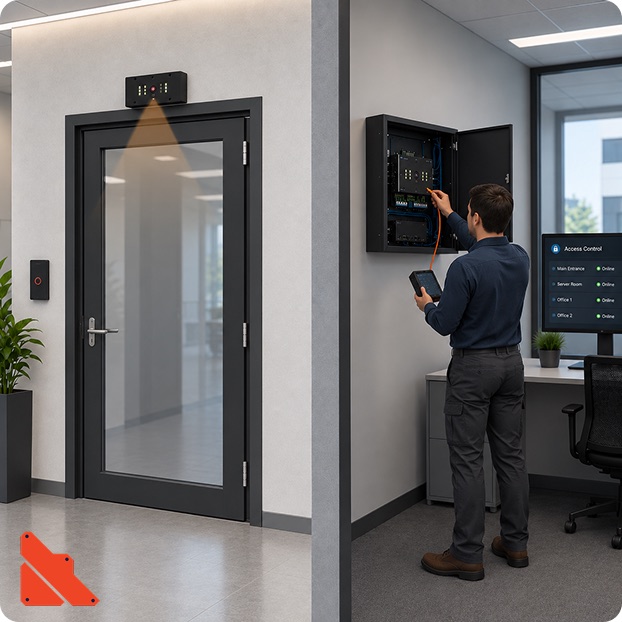
What Tailgate Detect looks like.
Have a similar challenge?
Tell us about it. We'll set up a short call, listen to the context, and send a written brief on where to start. No commitment.